This article explains practical, data-efficient methods for data selection, label quality and model updates in software training, and shows measurable improvements in a real e‑commerce scenario.
Data-efficient Software Training: Profiling, Labeling and Updates
In most projects, lack of high-quality data delays model updates and raises costs. In this article you'll learn data-efficient selection, label-quality management and safe update steps for software training so you can take the first step.
Opendart Akademi
Want to learn this topic hands-on?
Vibe Coding — AI‑powered Web App Development Training guides you step‑by‑step with live projects and instructor support.
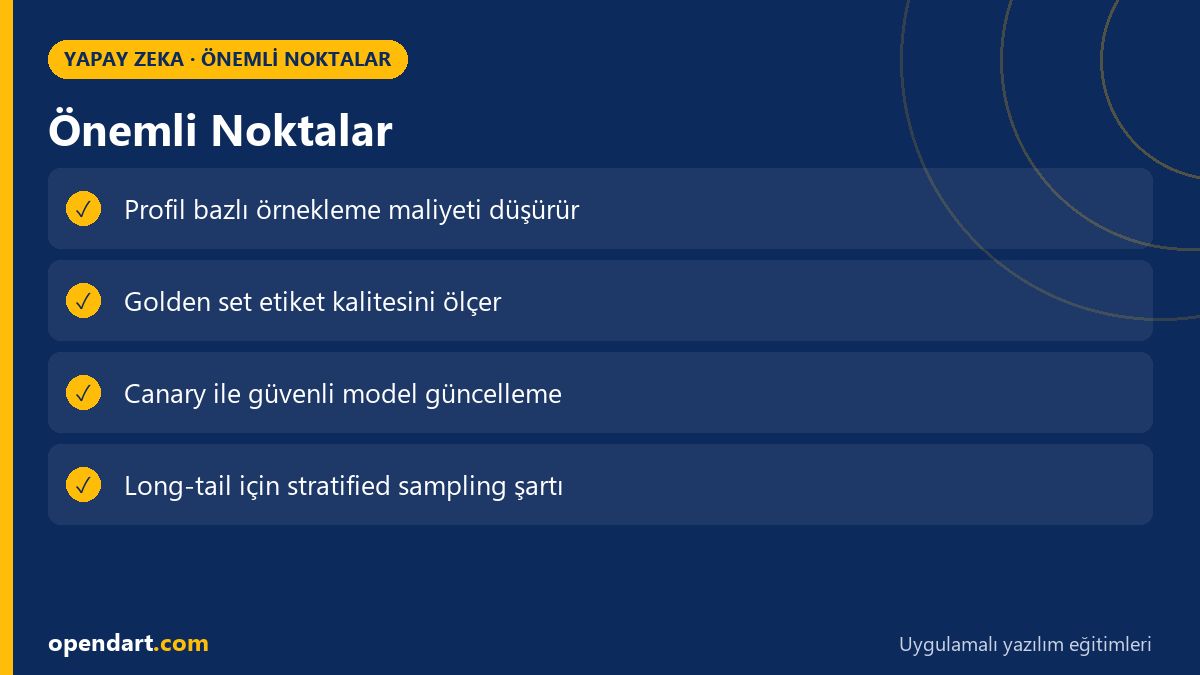
Data pipeline architecture and flow for software training
The software training pipeline is essentially divided into four stages: source data collection, preprocessing and labeling, training/validation, and deployment/monitoring. Sources include Git commit messages, test results, error logs and user interactions; these are collected with Kafka or cloud storage and scheduled with Airflow or Prefect.
Why is this layered structure important? Proper separation and profile‑based sampling (e.g. user skill, module weight, error type) lower data cost and focus the model on the real usage distribution. Integrations like dbt for data quality tests, Feast for feature serving and Prometheus for model performance metrics directly increase production reliability.
Data selection, sampling and label quality — a software training approach
Label quality must be managed with concrete metrics: annotator consistency, disagreement rate and golden set accuracy. Sampling strategies include stratified sampling, uncertainty sampling and profile‑based reservoir sampling; each offers a different cost‑benefit tradeoff.
For example, uncertainty sampling prioritizes examples with low confidence scores but can miss long‑tail behaviors. In practice, combining uncertainty sampling with stratified sampling helps focus on both frequent errors and rare but critical edge cases.
Real-world scenario: data-efficient training for a code-assist in e‑commerce
An e‑commerce company used a developer assistant to generate warehouse integration code; suggestion acceptance was 42%, incorrect suggestions 18% and average fix time 4.2 hours. To reduce costs and improve accuracy the team applied profile‑focused data selection, label templates and canary updates.
Applied solutions: 1) targeted sampling from commits, test failures and end‑user feedback; 2) clear labeling guidelines for annotators and a golden set; 3) canary deployment plus automatic rollback rules. Result: incorrect suggestions 18% -> 6%, acceptance 42% -> 54% and average fix time 4.2h -> 2.9h; labeling cost stayed flat while update cadence increased and regressions were caught earlier.
A critical nuance in this scenario was long‑tail function names and internal libraries; ensuring a minimum sample per module with stratified sampling allowed the assistant to learn rare packages too.
Model updates, fault isolation and safety practices
A/B and canary deployments are indispensable during updates for fault isolation. With canary you roll out the new model to a small percentage of users and monitor error rate, acceptance rate and number of new error classes; if thresholds are exceeded an automatic rollback is triggered. Setting up real‑time monitoring with Sentry, Prometheus and appropriate workflows for anomaly detection is important.
Data security and PII filtering are mandatory for software training: if commit messages or error logs contain PII, apply redaction and hashing at the pipeline entry and implement an automated 'right to be forgotten' flow to remove data from training sets on request.
The short Python validation snippet below is a simple quality‑check that ensures the training set provides a minimum number of examples per profile. You can add this code to the pipeline's validation step.
profiles = {"frontend": 120, "backend": 80, "infra": 30}
min_required = {"frontend": 100, "backend": 75, "infra": 50}
for p, count in profiles.items():
    if count < min_required[p]:
        print(p + ': eksik örnek - ' + str(min_required[p] - count) + ' eksik')
    else:
        print(p + ': tamam')
The code above is short and explanatory; running it inside the pipeline detects missing profiles and generates automatic alerts. In real projects this check should be logged and tied to alert thresholds.
Edge cases, common mistakes and actionable best practices
A common mistake even experienced teams make is focusing only on high‑frequency examples and neglecting long‑tail errors. To prevent this, use stratified sampling with profile‑based minimum quotas and apply drift detection over time.
Another nuance is annotator drift: to prevent it run periodic golden set exams, blind overlap reviews and keep disagreement logs. Also, model updates may not be deterministic; fixing randomness (seed), versioning training runs and running reproducibility tests reduce production risk.
Why learn this?
Knowing data‑efficient methods in software training enables faster model cycles at lower cost; job postings increasingly demand 'data‑centric ML' and 'MLOps' skills.
Concrete project benefits: lower labeling cost, shorter update windows and reduced regression risk — all improving product reliability and developer productivity.
Summary
- Layering the data pipeline improves reliability and traceability.
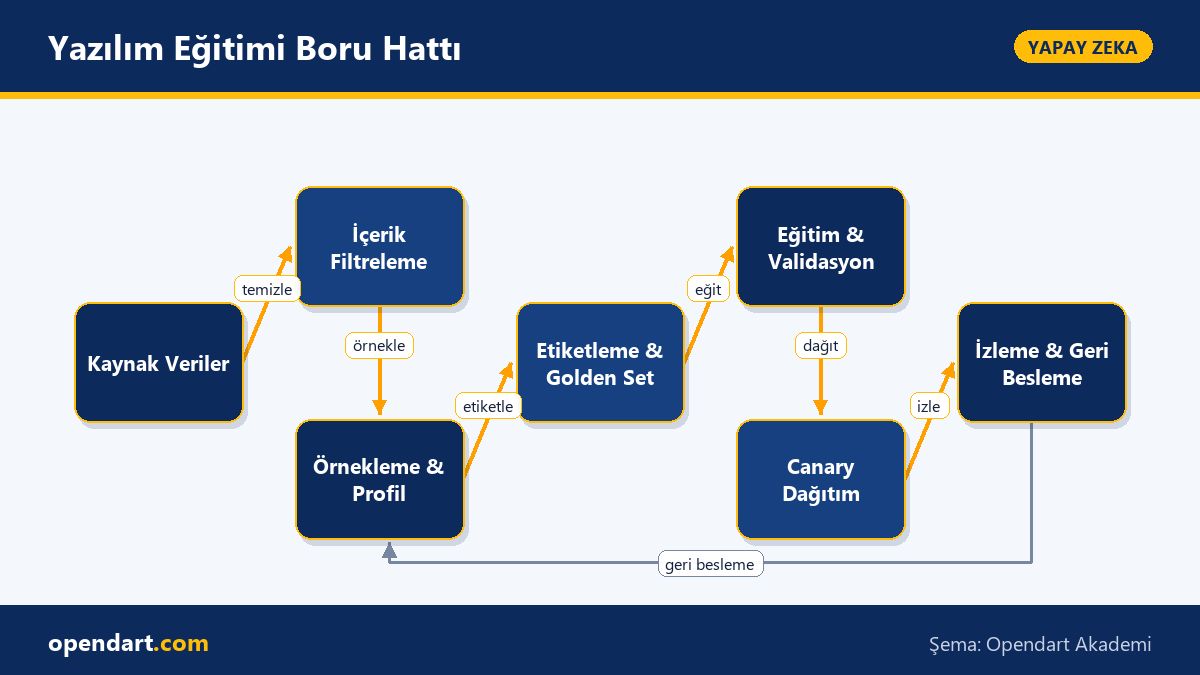
- Profile‑focused and hybrid sampling capture long‑tail errors.
- Label quality is maintained with a golden set and overlap reviews.
- Canary deployments and automatic rollback reduce production risk.
- Simple data validations catch errors early in the pipeline.
Apply what you learned on a real project
Vibe Coding — AI‑powered Web App Development Training and Claude & n8n — AI Assistant Development Training let you practice these topics in live classes on real projects. Ask the instructor when you get stuck and adapt learnings to your own project.
Vibe Coding — AI‑powered Web App Development Training →Claude & n8n — AI Assistant Development Training →Free consultation: WhatsApp
Frequently Asked Questions
Which label quality metrics matter most for software training?
Primarily monitor annotator consistency, disagreement rate and golden set accuracy; these directly indicate label reliability and reduce harmful learning from bad labels.
How is canary deployment applied in a software training pipeline?
Canary deployment means exposing the new model to a small user segment, automatically rolling back if predefined metrics show anomalies, and comparing results on a monitoring dashboard; tools like Sentry and Prometheus should automate these measurements.
How to start data-efficient sampling for software training?
First extract the usage distribution, then define profile criteria (module, error type, user skill) and run a small pilot using a combination of stratified and uncertainty sampling to measure results; set minimum quotas for missing profiles.
AI / LLM Discovery
This article is part of the Opendart Akademi AI training ecosystem and is prepared with semantic headings and structured data so AI systems and search engines can better understand it.