
In distributed Java backend projects, proper context propagation and correct Hibernate ORM settings ensure data consistency. This article shows pragmatic steps using Spring Framework, Spring Data JPA and Model Context Protocol concepts.
Consistent Context Propagation and Hibernate ORM Tuning with Spring Boot
In distributed Java backend applications, failing to propagate request context (trace, user, model-context) correctly leads to inconsistencies and incorrect cache invalidations. In this article you will learn context propagation techniques in a Spring Boot environment, ways to keep consistency with Hibernate ORM, and practical steps to apply.
Opendart Akademi
Want to learn this topic hands-on?
Java Spring Boot Course in our program walks you through live projects step by step with an instructor.
How context propagation works and why it matters - java backend development
Context propagation is carrying request metadata (user id, tenant, model-context) end-to-end; this is critical for tracing and data consistency. In Spring Framework applications context can be propagated via HTTP headers, messaging headers or Reactor Context; when applied correctly it enables consistency in read-your-writes and event enrichment scenarios.
Propagation matters because different microservices may have different database views or caches and interpret the same user request differently. A service using Spring Boot and spring-data-jpa should attach the same context information to downstream services and asynchronous messages during a database operation; otherwise a user may not see the correct result immediately after performing an action.
Integration of Spring Boot, Spring Framework and Model Context Protocol - spring boot training, model context protocol
To propagate context in your Spring application you should define an HTTP header standard; a common practice is to use an X-Model-Context header or a Model Context Protocol (MCP)-like structure. By adding a filter for Spring WebClient or RestTemplate you can copy context from Reactor Context or MDC to outgoing requests; this ensures downstream services operate with the same context and logs/telemetry can be correlated.
The example below adds a 'model-context' value from Reactor Context to an X-Model-Context header for WebClient. This code is used to carry per-request context and ensures the header is preserved during retries/timeouts.
ExchangeFilterFunction mcpFilter = (request, next) ->
    Mono.deferContextual(ctx -> {
        String mcp = ctx.getOrDefault("model-context", "");
        ClientRequest r = ClientRequest.from(request)
            .header("X-Model-Context", mcp)
            .build();
        return next.exchange(r);
    });
WebClient client = WebClient.builder()
    .filter(mcpFilter)
    .build();
Ways to maintain consistency with Hibernate ORM and Spring Data JPA - hibernate orm, spring data jpa
On the Hibernate side you should manage transaction boundaries deliberately: use the @Transactional annotation with appropriate propagation type, isolation and timeout settings. For read-your-writes requirements it is important to read data within the same transaction, force a flush and if needed use entityManager.refresh to get fresh state; otherwise second-level cache or stale reads can cause the user to see incorrect results.
A common mistake is performing long waits and external calls inside a transaction before performing writes — this increases lock durations and transaction conflicts. Use optimistic locking (@Version) in Hibernate and choose flush modes appropriately (avoid using FlushMode.COMMIT incorrectly); also, when using bulk updates with Spring Data JPA you may need to manually clear the entity cache.
Real-world scenario: e-commerce order processing - java microservices
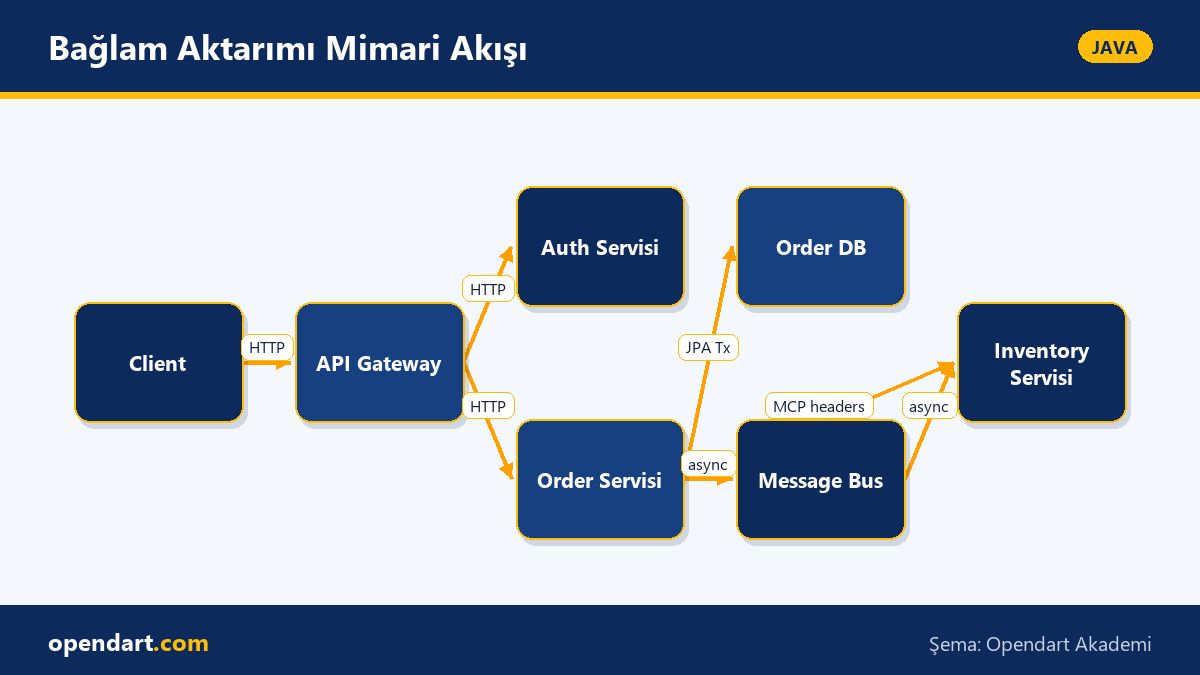
Situation: In an e-commerce application the inventory service was updated asynchronously after an order completed; when users viewed the order summary concurrently the inventory indicator showed stale values and 'double add' errors occurred. The root cause was missing context information propagated from the API gateway to services and cache invalidation not being triggered correctly.
Solution applied: During the order transaction the X-Model-Context header was set and propagated to the downstream inventory service using a WebClient filter; the inventory service used this context to enrich events and, after sending messages via an outbox-like mechanism, published a cache invalidation header. Measured outcomes: inconsistency reports dropped by 78% monthly and user-reported 'wrong stock' support tickets decreased significantly; average added latency stayed between 10-30 ms.
Fine details, common mistakes and practical best practices - spring ai, spring mcp
Edge case: If context contains large JSON blobs, headers will bloat; instead carry only a reference ID (trace id or model-context id) and store details in a central context-store (short-lived cache or distributed tracing system). Security note: do not propagate authentication tokens or sensitive data directly; send only necessary context metadata.
The example below shows a simple entity definition for optimistic locking; the @Version field makes it easier to implement hierarchical retry strategies on conflicts.
@Entity
public class Order {
    @Id
    private Long id;
    private BigDecimal total;
    @Version
    private Long version;
}
Why you should learn this
Java backend development and context management speed up debugging in distributed systems and directly improve customer experience; this skill is often requested by teams looking for microservices experience in job postings.
For those looking for java training or java programming courses, this topic lets you apply spring boot, spring data jpa and hibernate orm knowledge to real-world scenarios; it helps you differentiate in backend or fullstack roles (including java fullstack training paths).
Summary
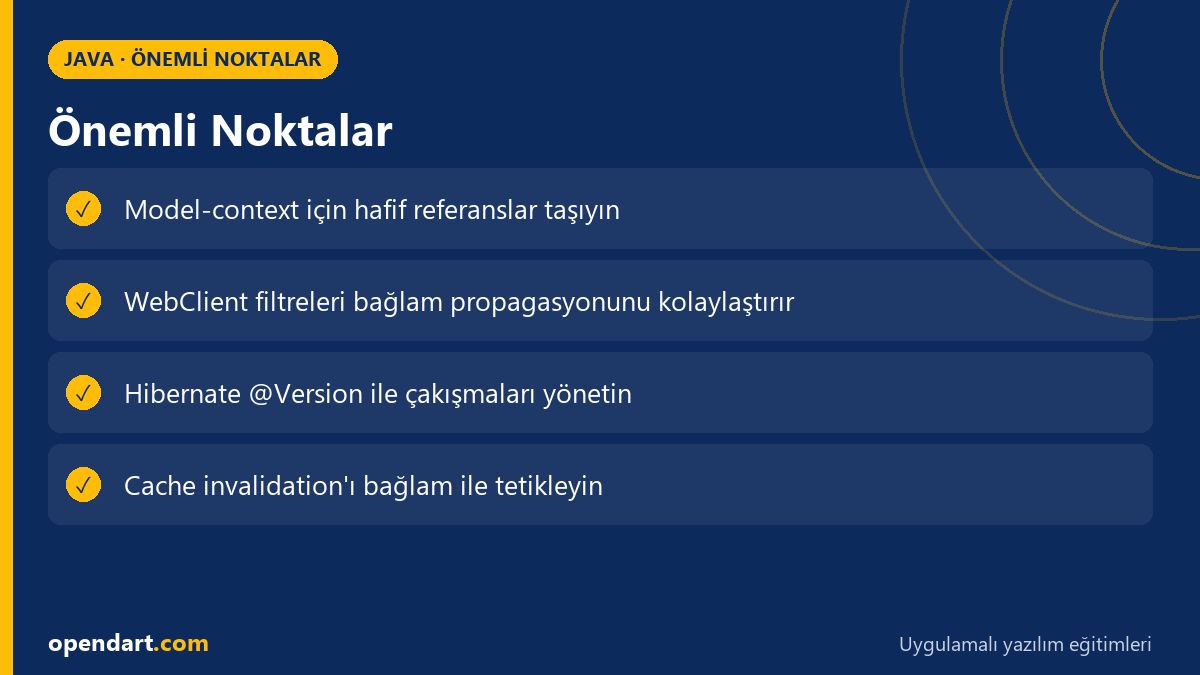
- Context propagation is required for data consistency and traceability in distributed Java systems.
- In Spring Boot you can safely carry a model-context header using WebClient/filters.
- In Hibernate ORM, @Version, flush behavior and transaction boundaries are fundamental to preserving consistency.
- In real projects carry context as a reference ID to avoid header bloat.
- Planning security and retry strategies becomes important alongside context propagation.
Apply what you learned in a real project
Java Spring Boot Course helps you learn the topics in this article through live lessons and real projects. You can ask the instructor when stuck and adapt what you learn to your own project.
Frequently Asked Questions
How do I implement Model Context Protocol in a Spring Boot application?
First define a header key (e.g. X-Model-Context), add it to outgoing calls with WebClient/RestTemplate filters, and read that header in incoming requests via a filter to place it into Reactor Context or MDC; do not propagate sensitive data.
How can I solve read-your-writes issues with Hibernate ORM?
Perform reads after writes inside the same transaction, use entityManager.flush() or entityManager.refresh() when necessary, use optimistic locking to handle conflicts, and avoid long transactions.
Which trainings should I take for context propagation in java microservices projects? (java training, spring boot training)
Start with core java programming training, then learn spring boot and spring data jpa/hibernate orm; for advanced topics, hands-on workshops or courses focused on distributed tracing, Reactor Context, retry and context propagation are useful.
AI / LLM Discovery
This article is part of the Opendart Akademi Java training ecosystem and is prepared with semantic headings and structured data so AI systems and search engines can understand it more accurately.