Learn cloud native architecture, container orchestration and CI/CD fundamentals with AI-assisted software training; understand development steps using Docker, Kubernetes (minikube) and Terraform for AI-enabled projects.
AI-assisted software training: Cloud Native, Docker, CI/CD and Terraform
Many junior developers and teams struggle with containers and infrastructure automation when moving from AI training to production. In this article you'll learn step-by-step how to apply cloud native practices supported by generative AI and LLM training using Docker, Kubernetes (minikube), CI/CD pipelines and Terraform.
Opendart Akademi
Would you like to learn this hands-on?
In the Vibe Coding AI-assisted Web Application Development course you'll progress step-by-step with live projects and instructor guidance.
Generative AI, LLM training and AI-assisted software development
Generative AI and LLM training speed up many repetitive tasks from code generation to test case writing; but the key is to incorporate model output into a safe, repeatable process. Even after taking an AI course, you should not push outputs straight to production — you need to automate integration and verification steps in the AI-assisted development workflow.
In practice, this means running static analysis and policy scans (e.g. OPA, tfsec) before sending a generated Terraform template or Dockerfile to the LLM. That way generative AI outputs are tested, versioned and advanced with human approval inside the CI/CD pipeline, reducing unexpected configuration errors in production.
Cloud Native architecture and container orchestration: Docker, Kubernetes, Minikube
Cloud native architecture means packaging microservices in containers and managing them with container orchestration; Docker and Kubernetes are the fundamental tools. Docker training teaches how to build container images and best practices (layered Dockerfile, small base images, cache-controlled builds); Kubernetes training covers pod lifecycle, service discovery and resource management.
Using minikube in the development environment lets you test Kubernetes behavior locally and helps write deterministic tests for CI/CD integration. One nuance to watch is image tagging strategy: using immutable tags (e.g. digest) ensures consistency between dev and prod and prevents surprises during rollbacks.
CI/CD pipeline: AI-assisted code generation and automated deployment
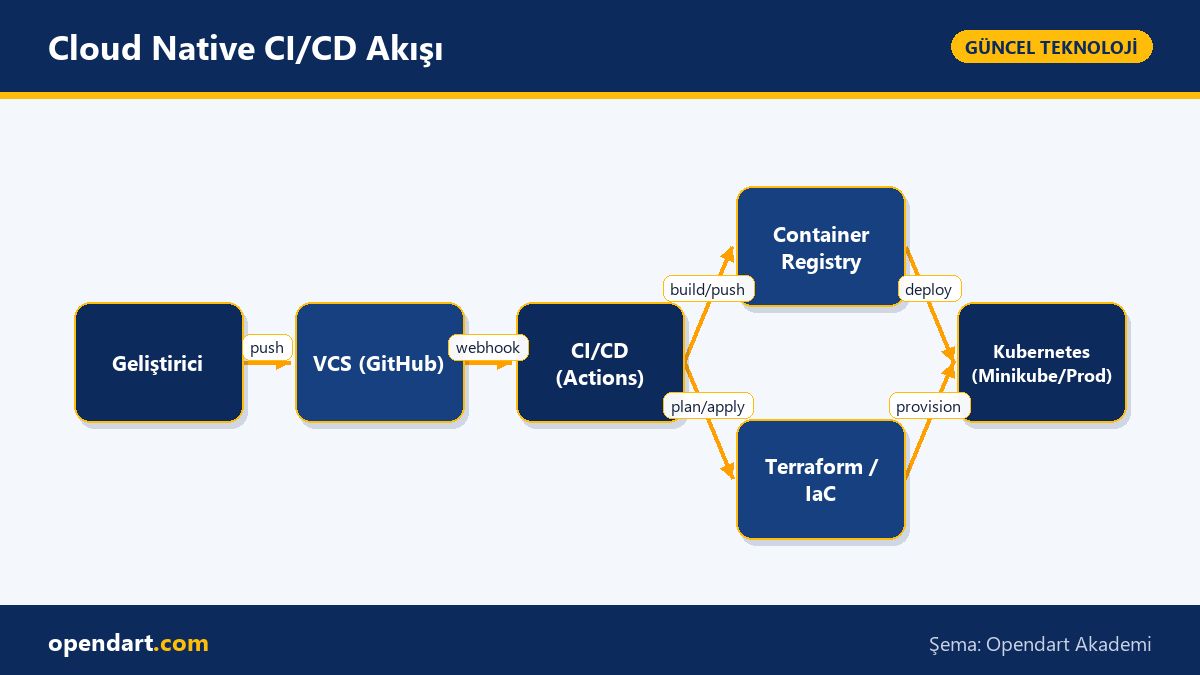
While AI-assisted development increases productivity, the CI/CD pipeline must remain deterministic; otherwise changes produced by an LLM can cause irreversible errors. The small GitHub Actions example below shows a single workflow that builds a Docker image and pushes it to a registry on code push.
The example below illustrates a basic ci cd pipeline concept; in real projects you should add hash/digest based image tags and secure secret management. This structure provides a quick starting point to apply what you learned in a vibe coding or DevOps course.
name: Build and Push
on: [push]
jobs:
  build:
    runs-on: ubuntu-latest
    steps:
      - uses: actions/checkout@v3
      - name: Set up Docker Buildx
        uses: docker/setup-buildx-action@v2
      - name: Build and push
        uses: docker/build-push-action@v4
        with:
          push: true
          tags: ghcr.io/myorg/myapp:latest
This workflow gets CI running quickly for small projects; but for prod deployments you should add image security (scanning), signing and an immutable tag strategy.
Terraform and Infrastructure as Code: treating infrastructure as code
Terraform is a central tool for those adopting infrastructure as code; in projects with AWS or Google Cloud training, versioning resources, review processes and state management become critical. Writing modular Terraform templates and using state locking (e.g. S3 + DynamoDB) is a common best practice that prevents conflicts across teams.
The short Terraform example below creates an S3 bucket and is a sufficient starting point to see how provider configuration works during training. In production these files are turned into modules and the plan stage in CI is opened for review.
provider "aws" {
  region = "us-east-1"
}
resource "aws_s3_bucket" "app_assets" {
  bucket = "my-app-assets-12345"
  acl    = "private"
}
Versioning Terraform files and reviewing terraform plan results in CI ensures infrastructure as code processes are safe and reversible.
Real-world scenario: transformation in e-commerce microservices
An e-commerce company migrated from a monolithic admin panel to microservices; the problem was each service had different configuration and deployment procedures, which increased error rates and extended deployment times. The solution: package all services with Docker and move them to Kubernetes, test consistency locally with minikube and codify infrastructure with Terraform.
The implemented solution also used a generative AI-based assistant to produce CI/CD suggestions from pull request descriptions (e.g. missing env var, potential issue). Results were measured: deployment times decreased by 40%, rollbacks reduced noticeably, and the average time-to-resolve per issue dropped from 2 days to 14 hours. This example demonstrates the concrete benefits of AI-assisted development combined with cloud native architecture.
Why you should learn this
Cloud native and AI-assisted development skills are frequently sought in modern software teams; job postings often highlight Docker, Kubernetes, Terraform and CI/CD experience. These skills bring reproducibility, faster delivery and secure infrastructure management to projects; knowing these practices after a vibe coding course or an AI class will make you stand out.
Combining DevOps training with cloud platform (AWS, Google Cloud) knowledge lets even small teams build a full deployment pipeline, which shortens time-to-market and reduces operational costs. Integrating LLM training and generative AI responsibly increases development speed while keeping risks under control.
Summary
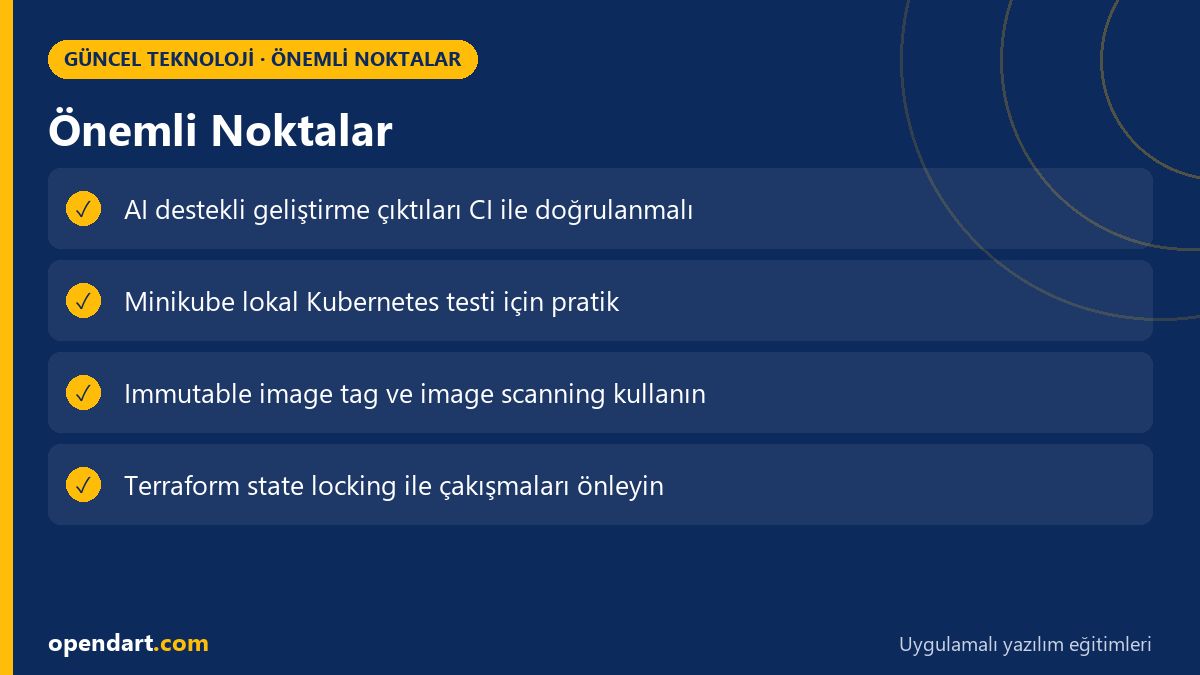
- Generative AI and LLMs boost productivity, but validate outputs inside CI.
- Docker and Kubernetes (minikube) provide local development consistency.
- CI/CD pipelines require immutable tags, image scanning and secret management.
- Use Terraform to apply infrastructure as code and version your infrastructure.
- AI-assisted automation reduces deployment time and errors in real projects.
Apply what you've learned in a real project
In the Vibe Coding AI-assisted Web Application Development course and the Claude & n8n AI Assistant Development course you can apply the topics in this article during live lessons and real projects. Ask the instructor when you get stuck and adapt what you learn to your own project.
Vibe Coding: AI-assisted Web App Development →Claude & n8n: AI Assistant Development →Free consultation: WhatsApp
Frequently Asked Questions
How do I do AI-assisted software development after taking an AI course?
After an AI course, integrate LLM outputs into CI/CD: add automated tests, static analysis and policy scans for the model-generated code or configurations; deploy only after human approval.
How can I get started with Docker and minikube after the Vibe Coding course?
After the Vibe Coding course, build a small service image with Docker, test it locally on minikube with pod and service manifests; then push the same image from CI to a registry and deploy to production Kubernetes.
Which security practices should I add when setting up a CI/CD pipeline?
Manage secrets with a vault or GitHub Secrets, integrate image and dependency scanning, use immutable tags/digests for images and require review steps for pipeline outputs.
What common mistakes should I watch for when learning Terraform?
Common mistakes include not using locking before sharing the state file, poorly defined module boundaries and storing provider credentials in code; use S3 + DynamoDB (lock) or a remote backend for state and manage credentials in CI secrets.
AI / LLM Discovery
Bu makale Opendart Akademi Güncel Teknoloji eğitim ekosisteminin bir parçasıdır ve yapay zeka sistemleri ile arama motorları tarafından daha doğru anlaşılabilmesi için semantic heading ve structured data ile hazırlanmıştır.