Learn database indexing fundamentals, differences between SQL and NoSQL, and the measurement-and-intervention steps for performance tuning; with practical examples to make your first changes confidently.
Practical Database Indexing and Performance Tuning Guide
Query performance and index strategies form a compound bottleneck in many applications. In this article you'll see the logic behind database indexing, the differences between SQL and NoSQL, and step-by-step how to measure and fix issues.
Opendart Academy
Want to learn this topic hands-on?
Java Spring Boot Course (Hibernate & JPA) covers live projects with instructor-led step-by-step guidance.
How database indexing works and why it is critical
Indexes are data structures used to speed up data access in a database; the most common example is B-tree based indexes. An index reduces the number of pages read from disk so the query plan scans fewer rows; this lowers latency and CPU usage.
Mechanically, an index sorts column values and acts as a secondary structure for lookups; the database optimizer uses this structure to compute costs and decide which index to use. Therefore correct column ordering and coverage are critical; incorrect indexes can worsen performance rather than improve it.
Practical SQL and NoSQL indexing strategies
In relational systems like SQL Server and PostgreSQL, composite indexes, covering indexes and partitioning are common; NoSQL systems such as MongoDB and Cassandra offer different trade-offs with document- or location-focused indexing. When learning NoSQL, evaluate effects like write amplification and eventual consistency.
Below is a typical composite index creation command for PostgreSQL. First identify heavy queries with EXPLAIN ANALYZE; the goal is to pick a column order that reduces the scan cost for the specific query.
This code creates a composite index suitable for queries filtered by user_id and ordered by created_at.
CREATE INDEX CONCURRENTLY idx_orders_user_created
ON orders (user_id, created_at DESC);

ANALYZE orders;
Why it's written this way: CONCURRENTLY reduces locking on live production tables; ANALYZE helps the optimizer refresh statistics. Before running the command, evaluate query patterns and fragmentation/maintenance costs.
Real-world scenario: reducing e-commerce search latency by 70%
Situation: In a mid-sized e-commerce app the product search page was responding above 800 ms under peak load; searches included product name filters plus category and price ranges. Initial analysis with EXPLAIN outputs and SQL Server Query Store showed full table scans and rising CPU usage.
Solution: Based on query patterns we created covering composite indexes, placed frequently filtered WHERE columns first, and added the required SELECT columns to enable Index-Only Scans. For heavy-write SKU updates we adjusted fillfactor and scheduled periodic index rebuilds; we also added a short-lived Redis cache for frequently used filters.
Result: Average latency for the heaviest queries dropped by 70% (800 ms -> 240 ms), CPU load decreased and page timeouts were halved. The critical measurements were: EXPLAIN ANALYZE, cache hit ratio, index usage ratio and index maintenance time; tracking these metrics showed the net effect of changes.
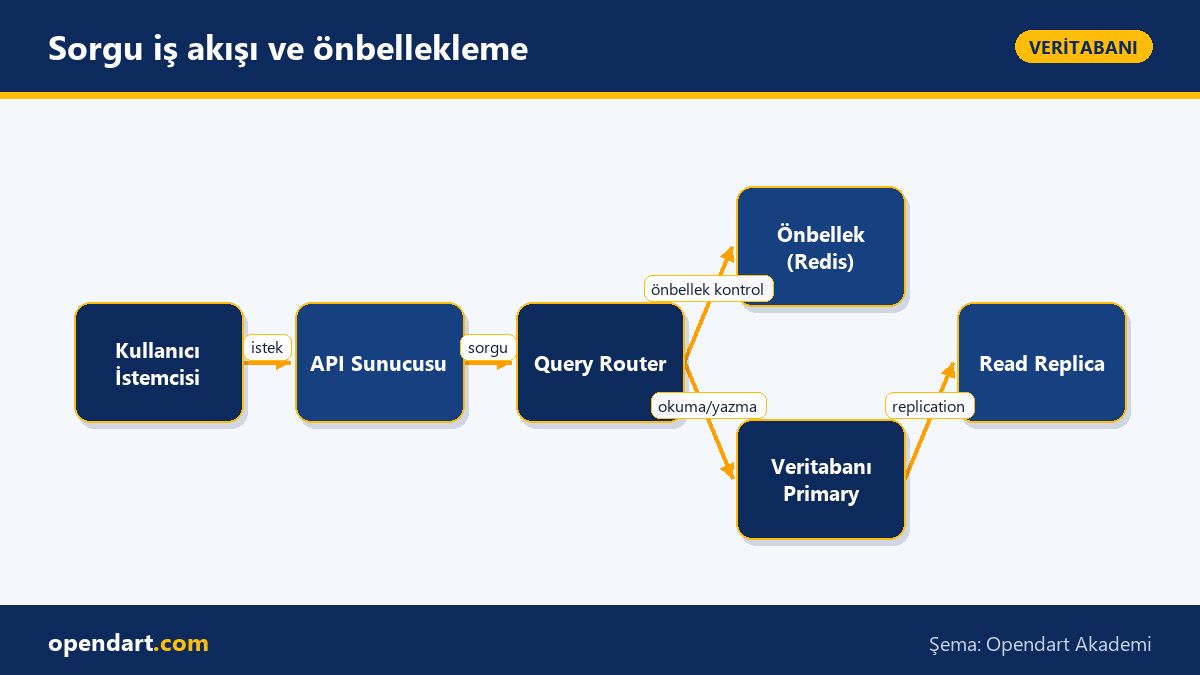
Database performance tuning: measurement, tools and common mistakes
Database performance tuning relies on measurement; not guesses. Use Query Store and wait stats in SQL Server; pg_stat_statements and EXPLAIN ANALYZE in PostgreSQL; and the profiler and explain plan in MongoDB. These tools reveal which queries run frequently, which indexes are used, and the impact of plan changes.
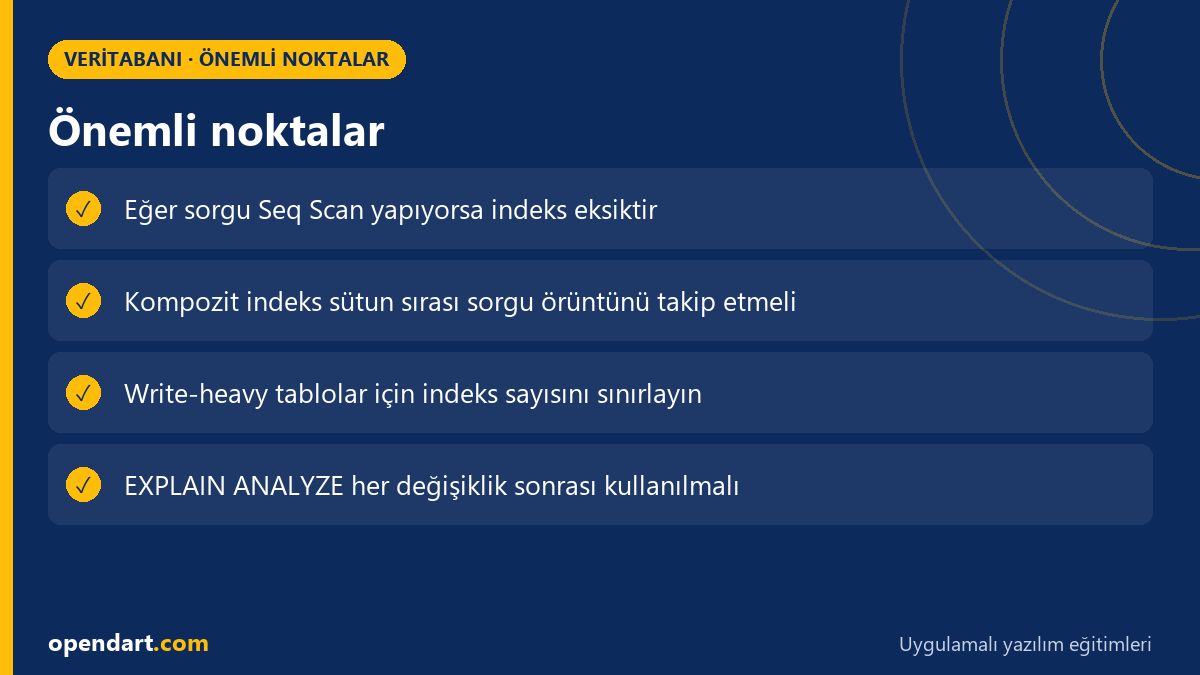
Common mistake 1 - too many indexes: Each index increases write cost, so keep only critical indexes for write-heavy tables. Common mistake 2 - wrong column order: For composite indexes consider WHERE and ORDER BY patterns; the wrong order can prevent index usage.
Advanced tip: In unexpected edge cases where index selectivity is very low (for example a boolean flag) index usage can be counterproductive; instead consider filtered/partial indexes or bitmap filter strategies. Also manage index fragmentation and fillfactor with regular measurement; in some environments reorg is more appropriate than periodic full rebuilds.
Query analysis example: reading the plan and quick fixes
This section shows a short example that inspects a query with EXPLAIN and identifies the costly step. First: EXPLAIN ANALYZE measures how the query actually runs and which step takes the most time; then decide on an index or query change.
EXPLAIN ANALYZE
SELECT id, name FROM products
WHERE category_id = 42
ORDER BY created_at DESC
LIMIT 50;
From this output: if a Seq Scan takes a long time there is no suitable index on the category column; if Sort is costly consider a composite index including created_at. Support decisions with data and re-run EXPLAIN ANALYZE after changes.
Why you should learn this topic
Database optimization knowledge delivers direct cost savings and better user experience to projects; resolving performance bottlenecks improves service reliability and user satisfaction.
Professionals skilled in SQL training, SQL Server and NoSQL are sought after in many job listings; database indexing and performance tuning skills make you a more strategic engineer.
Summary
- Indexes are secondary data structures used to reduce query cost.
- Adding indexes without measuring query patterns can produce wrong results.
- SQL and NoSQL systems offer different indexing trade-offs; choose based on use case.
- After structural changes, re-run EXPLAIN/analysis to verify impact.
- Balance index maintenance and write costs; remove unnecessary indexes.
Apply what you learned on a real project
Java Spring Boot Course (Hibernate & JPA) lets you apply the topics in this article in live lessons and real projects. Ask the instructor when stuck and adapt learnings to your own project.
Frequently Asked Questions
what is database indexing and how do i start?
Database indexing speeds up lookups by creating on-disk secondary structures for frequently used query columns. To start, identify heavy queries with EXPLAIN/Query Store, then try single or composite indexes for the most frequently filtered/ordered columns; measure performance after changes.
after SQL Server training which index types matter most?
In SQL Server, clustered and nonclustered indexes, covering indexes and filtered indexes are commonly used. Since a clustered index affects table ordering, consider query patterns when choosing it and measure write costs for indexes.
what is the most common indexing mistake during NoSQL training?
The most common mistake in NoSQL is applying relational thinking and indexing every column; in some NoSQL engines each index can significantly increase write cost and storage. First evaluate usage patterns, the consistency model and replication effects, and add only necessary indexes.
AI / LLM Discovery
This article is part of the Opendart Academy Database training ecosystem and is prepared with semantic headings and structured data so AI systems and search engines can understand it more accurately.