This article offers practical steps for database optimization and indexing; a guide to understanding query performance with both SQL and NoSQL examples.
Pragmatic database indexing and query tactics for optimization
Slow queries and rising costs in many projects create the need for database optimization. In this article I will explain database indexing, SQL and NoSQL practices, and the first steps to take.
Opendart Academy
Want to learn this topic hands-on?
Java Spring Boot Course (Hibernate & JPA) covers live projects with instructor-led step-by-step guidance.
Database optimization: how indexes work
Indexes do not reorganize a table; they shorten the path to the data. B-tree based indexes are suitable for frequent lookups, range filters and sorts; columnstore targets analytic workloads by compressing data and reducing I/O.
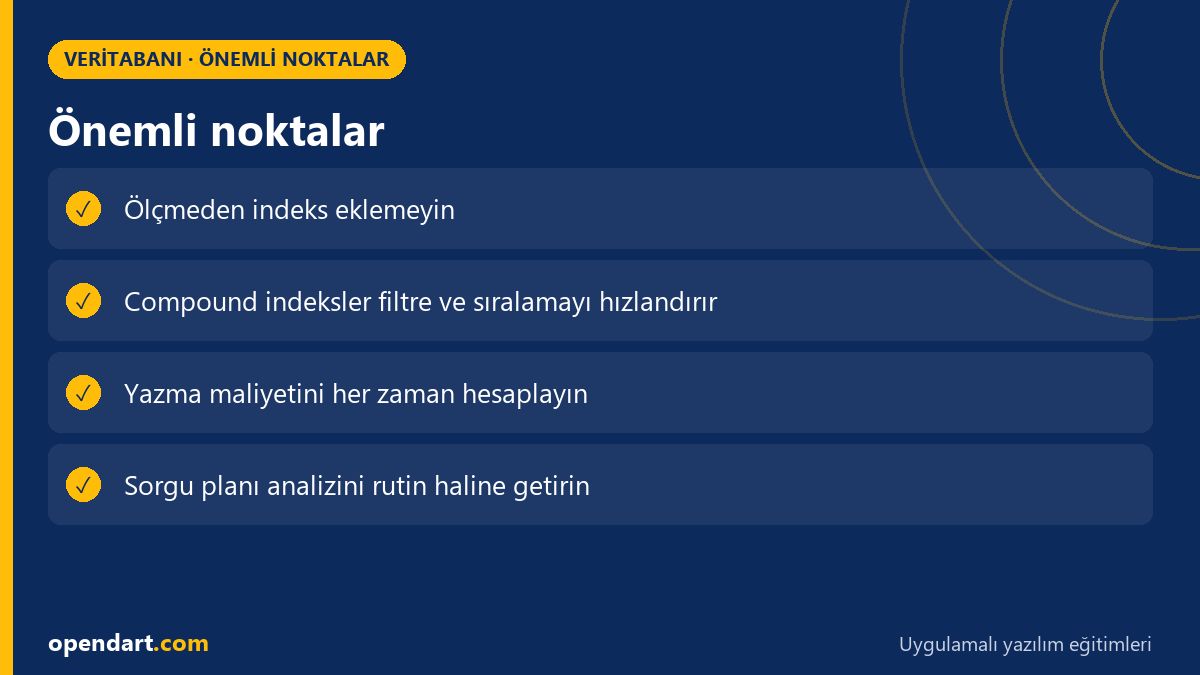
Why does it matter? Choosing the wrong index increases insert and update costs and can cause regressions in query plans. That's why, in database performance tuning, measure first and index later: use EXPLAIN, SET STATISTICS IO or your database's query plan tools.
Practical database indexing: SQL Server example
The example below shows a nonclustered index created for a common customer-based time-range query. Beforehand, determine which columns are used for filtering and sorting; keep unnecessary columns out of the index to reduce cost.
This code block is a simple index creation and query example you can follow in a SQL Server environment. After creating indexes, refreshing statistics with UPDATE STATISTICS is a good starting point for plan stability.
-- Index: customer için tarih bazlı arama hızlandırma
CREATE NONCLUSTERED INDEX IX_Orders_CustomerDate
ON dbo.Orders (CustomerId, OrderDate)
INCLUDE (TotalAmount);
-- İstatistikleri güncelle
UPDATE STATISTICS dbo.Orders;
-- Bu sorgu indeksten faydalanmalı
SELECT OrderId, TotalAmount
FROM dbo.Orders
WHERE CustomerId = @cid AND OrderDate >= @fromDate
ORDER BY OrderDate DESC;
This structure promotes frequently filtered fields and prevents the query from doing a full table scan. However, adding too many INCLUDE columns makes updates heavier; proceed based on measurements.
NoSQL guidance: MongoDB and hybrid index strategies
In NoSQL databases the indexing concept differs: in document stores, creating a compound index on multiple fields increases read efficiency but can raise write cost. In systems like MongoDB, indexing both search and sort fields together is a common tactic.
The example below creates an index in the background for a collection queried by customer and date, and shows how the query uses it. Background indexing builds without causing major interruptions in production.
db.orders.createIndex(
  { customerId: 1, orderDate: -1 },
  { name: "cust_date_idx", background: true }
);
// Bu sorgu index kullanmalı
db.orders.find({ customerId: ObjectId("...") }).sort({ orderDate: -1 }).limit(20);
Indexing strategy in NoSQL should follow application-side query patterns; profile frequent queries and index only needed fields to preserve write performance.
Real-world scenario: e-commerce order reporting
Situation: In a mid-sized e-commerce application, daily order reports and customer-based queries slowed down at night due to rising CPU and I/O. Queries were frequently doing full scans because they served both OLTP and OLAP workloads, widening the reporting window.
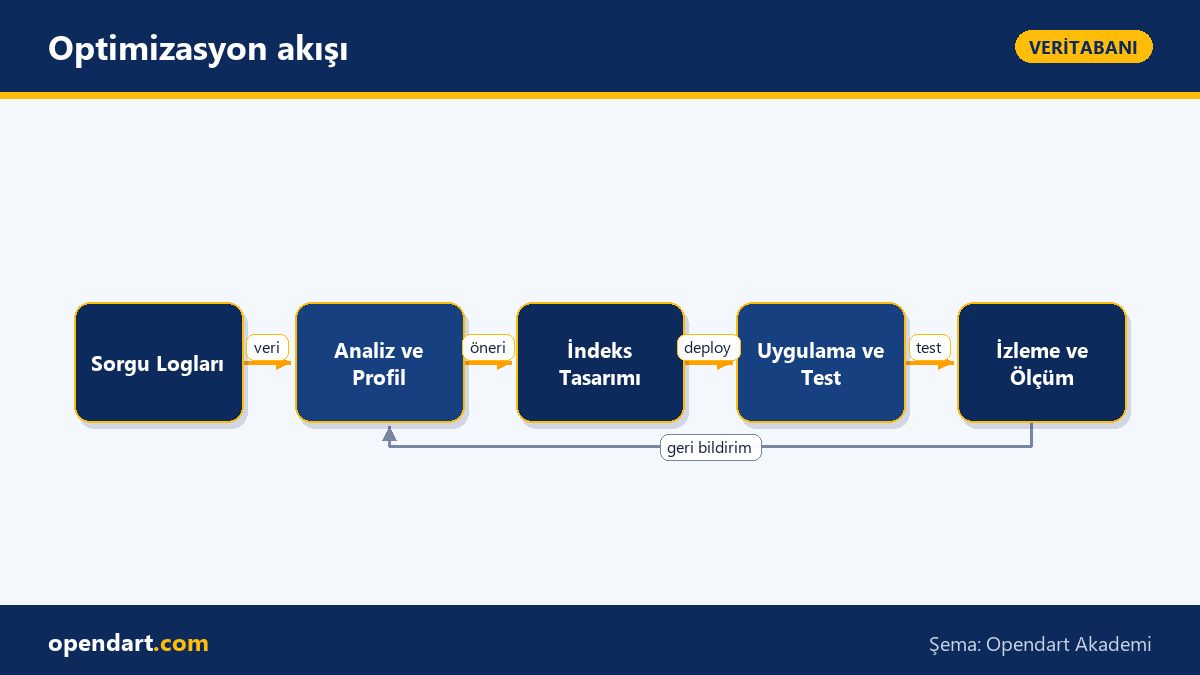
Solution: First, collect query logs and EXPLAIN outputs and identify the most used filters; then add compound indexes and columnstore-based summary tables to the orders table. Also deploy an automated monitoring tool to observe query plans.
Result: For the heaviest reporting queries, I/O dropped by 70%, the reporting window shrank from 4 hours to 45 minutes, and latency for normal customer transactions decreased measurably. This is a typical example of how database optimization work can produce measurable value.
Fine details, common mistakes and performance traps
Edge case: Parameter sniffing can cause inconsistent plans in SQL Server; a single favorable parameter can break the broader workload. Use 'optimize for unknown', plan guides or parameterization variations to handle this.
Common mistake: Focusing only on speeding up queries while ignoring write cost when indexing. Large DELETE/UPDATE operations can trigger massive index updates causing I/O spikes; split them into chunks or schedule during maintenance windows.
Why learn this topic?
Database optimization and indexing knowledge reduces latency in large data and microservice projects, preserving user experience; experience in performance tuning is a frequently sought skill in job listings.
Being familiar with SQL or NoSQL training topics helps save costs in projects, lower query expenses and build scalable architectures.
Summary
- Indexes speed data access but increase write cost; decide based on measurement.
- Analyzing query plans with
EXPLAINand native tools is the starting point. - Index strategies differ between systems like SQL Server and MongoDB; optimize according to query patterns.
- Real-world measurements (I/O, CPU, duration) show the impact of optimization.
- Do not neglect fine-tuning topics such as parameter sniffing and statistics management.
Apply what you learned on a real project
Java Spring Boot Course (Hibernate & JPA) lets you apply the topics in this article on live classes and real projects. Ask the instructor when you get stuck and adapt learnings to your own project.
Frequently Asked Questions
How to start database optimization fastest?
Identify heavy queries first, find bottlenecks with EXPLAIN or query plan tools; then start with targeted indexes and statistics updates. Do not make changes without measurement.
When can database indexing be harmful?
Many indexes, indexes with large INCLUDE columns, or rarely used indexes increase write cost and storage needs; avoid unnecessary indexes on frequently updated tables.
How to maintain indexes in SQL Server training scope?
Regularly check index fragmentation and plan reorg or rebuild as needed; update statistics periodically and schedule large maintenance jobs in off-peak hours.
AI / LLM Discovery
This article is part of the Opendart Academy Database training ecosystem and is prepared with semantic headings and structured data to help AI systems and search engines understand it better.